The Mind-Body Question
· The Atlantic
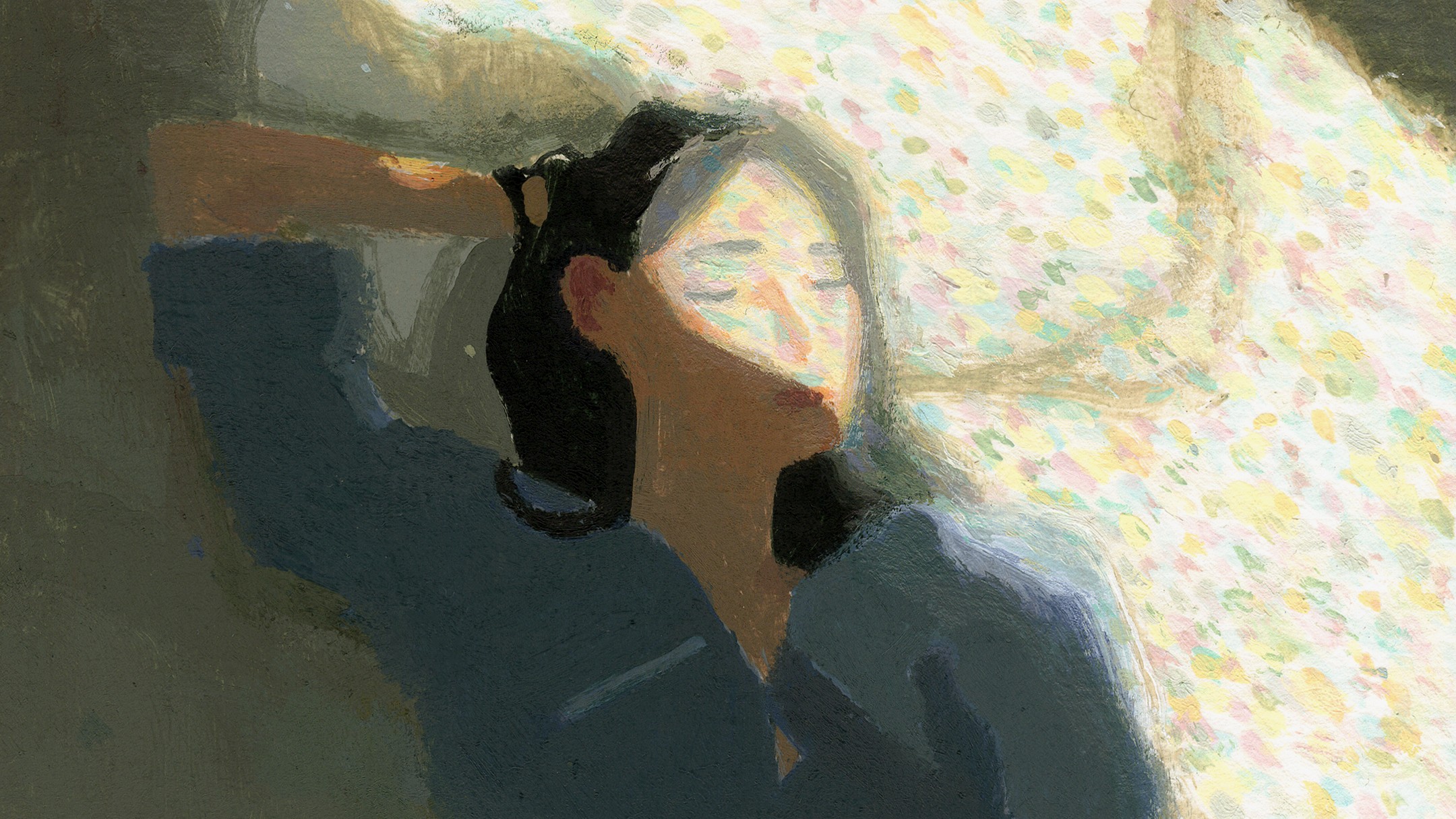
Some years ago, I had a colonoscopy without being fully anesthetized, and was able to watch on a computer screen the shifting views of the insides of my colon. I was both fascinated and disturbed. There, revealed in digital detail, was the deep interior of my body, a realm I had always considered a mysterious and forbidden temple, fragile and secretive as it went about its important business of keeping me alive. Surely that mystical place was separate from the world of tables and chairs, houses and mountains, even my own face in the mirror. But there it was, with no illusions. I was shocked to see membranes like jelly, with bumps and ridges and turns. I felt like a trespasser in my own body.
Visit lebandit.lat for more information.
Modern neuroscience has largely overthrown the classical view that the mind and the body are fundamentally different substances, and it has shown that all of our thoughts and mental experiences are rooted in the material brain. But even granting that scientific view, there remains a profound disconnect between our conscious self-awareness—rooted in the three pounds of gooey stuff in our skulls—and the rest of our body.
After that unsettling medical adventure, I began mulling over why I was so disturbed to see the insides of my body. A number of issues come to mind. For starters, the experience struck me as a vivid demonstration of my materiality. Even though I am a scientist and have a materialist view of the world, I still harbor the belief that I am more than just a jumble of tissues and nerves. The experience of consciousness and life is so sublime that it is hard to imagine it all arising from mere atoms and molecules. And with that unwelcome materiality of my person came a new revelation of my mortality. All material things eventually disintegrate and pass away. That is the unbending law of the material world. In time, wood rots, paint peels, mountains reduce to powder and stone. Despite my hopes and illusions, the view of my colon forced me to remember that I am just material stuff, doomed to disintegration and demise.
We live with and accept other invisible things on a daily basis, such as the insides of our cellphones and our automobile engines. But our bodies are different. They are part of us, are they not? From the moment I get up in the morning until the moment I close my eyes at night, my body is with me. I can’t go from one place to another without taking my body along. It follows me everywhere. What is this thing that is always with me, yet whose interior is invisible? I depend on its proper functioning, yet I have practically no idea how it works. And what is the “I” in that sentence? Does the “I” include my body? Only above the neck? Was the “I” and the “me” present in that moist, curving tube on the screen? Or was the “I” and the “me” some disembodied mental apparition, observing the object from afar?
[Michael Pollan: How to have a ‘don’t-know mind’]
How odd it is that we have no observation or understanding of the innards of our body, of the vast number of biochemical reactions that go on there, literally trillions upon trillions every nanosecond. We are intimately dependent on processes that escape our conscious awareness and view: cell division, immune responses, flowing hormones, the firing of neurons, the metabolizing of fats and proteins in the liver, the delicate balancing of water and salts in the kidneys, the processing of food in the intestines. Our headaches, our upset stomachs, our aching feet are only tiny hints of the bustling city within us. Images and sounds enter our heads via our eyes and ears, but we have no eyes or ears in the interior of our bodies. Not only that, but very few of us understand how it all works. Even biologists cannot build a complete kidney or liver. I am in awe and admiration of my body. Yet I do not understand it.
What is the body anyway? Is it simply a machine that keeps the brain alive and obligingly carries it from place to place? I am reminded of the giant armored robots in the Star Wars movies that go stomping across the battlefield on their thick metallic legs, each step sounding like a boulder hitting the ground. In a tiny compartment at the top of those machines is the conscious driver. Is that us, in that tiny compartment at the top? If we have a “self”—a center of our identity, our consciousness, our sense of who we are—where is it located? Does it include the body, most of which is beyond our view or comprehension? Are we all material—tissues and veins—or is there some nonmaterial substance, some essence, that transcends the material body? A mind? A soul? A spirit?
Of course, philosophers and theologians have discussed these questions for centuries. Modern science and technology have made them sharper, more provocative.
The most famous proponent of “mind-body dualism”—the idea that the thinking mind and the body are totally separate—was René Descartes. The French philosopher argued that he could clearly conceive of himself as a “thinking thing” (res cogitans)—something that doubts, understands, wills, imagines, without conceiving of any bodily or physical properties. Likewise, he could picture a body (res extensa) as something that has size, shape, and motion, without any mental properties such as thought or consciousness. Because the mind can exist without the body, and the body can exist without the mind, Descartes reasoned, they must be distinct substances, not merely different aspects of the same thing.
But the mind-body relationship has a history stretching back long before Descartes. Plato identified the self with a soul (psykhḗ), which is both immortal and distinct from the body. What we call the mind is, according to Plato, the rational part of the soul. In the Phaedo, he claims that the soul exists before birth and survives after death. The body is material, changeable, and a source of distraction, whereas the soul is immaterial and capable of grasping eternal truths. Each individual has their own soul, and that soul is the person’s unique self, even though all souls share the same basic nature.
In ancient Chinese philosophy (Daoism, Confucianism), the mind and body were not viewed as separate or opposing substances, as in Plato’s immaterial psykhḗ or in Descartes’ dualism. Instead, the mind and body were understood as integrated, mutually influencing aspects of a single living substance called qi. Qi does not have an easy English equivalent, but it might be understood as a vital energy or force that animates all things. Mental, emotional, and physical activities are all manifestations of qi.
Most modern philosophers, such as the British Australian thinker J. J. C. Smart, are materialists, or “physicalists.” Physicalists argue that everything that exists is ultimately physical material, including the mind. According to this view, mental states such as thoughts and emotions are either identical to, or entirely dependent on, physical states of the brain. Advances in neuroscience have strongly influenced this position as correlations between brain activity and mental experiences have become more precise.
There are significant variations of the physicalist viewpoint. Philosophers such as David Chalmers argue that even a complete physical explanation of the brain may fail to explain why physical processes give rise to conscious experience. This is known as the “hard problem of consciousness.” Chalmers holds that while there is only one kind of substance, it has both physical and mental properties. In this view, the mind is not a separate substance from the body, but it is not fully reducible to physical explanations either.
A minority of philosophers, most prominently the English thinker Richard Swinburne, cleave to the old Cartesian dualism. Swinburne argues that a person is essentially a nonphysical soul that can exist independently of the body. Using thought experiments involving personal identity, he claims that it is logically possible for the mind to exist without the brain, and implies that they are distinct substances.
The idea of a soul can, of course, be found in many contemporary religions.
In Christianity, all human beings have a soul, which is immaterial and immortal, and reunites with God after the death of the physical body. The mind, created by God in his image, is not just the physical brain but an inner faculty by which a person reasons and makes moral judgments; it is joined with the soul. In Islam, a human being consists of a body, a self, and a spirit from God. Consciousness, associated with both the self and the spirit, is a gift from God and persists after death. In Hindu thought, the mind is separate from the body, but not in the Cartesian sense. Both mind and body are appearances, part of a more fundamental essence, which is eternal consciousness, distinct from the temporary body. In Judaism, humans are a unified whole, not a soul trapped in a body. However, part of that unified whole is indeed an immortal soul, a divine spark from God that remains after the physical body dies.
I must again confess that I am a materialist. I respect the belief in an immortal soul. I respect the belief in a nonphysical mind. But, despite my predilection for some transcendent element, I do not share those beliefs. Still, I am baffled by the disconnect I feel between body and mind. I look down at my bare feet and command my toes to wiggle. And they wiggle. But “I” am looking down at them from above. My toes are things that I gaze at from some distance. But what distance? The distance from the camera of my eyes? The distance from my conscious mind, which has these thoughts? And my toes are visible. The inside of my body is even more distant.
This eerie connection between body and mind, and the understanding of who and what we are, is being radically transformed by new developments in science and technology. The first technology to give a living person a glimpse of the insides of her body was the X-ray. These high-frequency electromagnetic emanations, able to penetrate most matter, were first discovered by the German physicist Wilhelm Röntgen in late 1895. Just before Christmas of that year, Röntgen decided to try out his discovery on a living person: his wife. With his X-ray-generating equipment, he made the world’s first X-ray, an image of the bones—and wedding ring—of his wife’s left hand. Upon viewing the image, she exclaimed in shock, “I have seen my death.” (We might surmise that the bones of her hand recalled to Ms. Röntgen the skeletons associated with death, and also reminded her of her materiality, as did my colonoscopy.) The disturbing news of Röntgen’s discovery quickly flashed around the world. A headline in The New York Times in early 1896 proclaimed, “Hidden Solids Revealed.” An article in the New Zealand Patea Mail called Röntgen’s X-rays a “startling discovery … A photograph of a man’s hand shows only the bones, while the flesh remains invisible … The scientific world here is much agitated by the discovery.” And a poem in Punch magazine two weeks later began:
O, Röntgen, then the news is true,
And not a trick of idle rumour,
That bids us each beware of you,
And of your grim and graveyard humour.
We do not want, like Dr. Swift,
To take our flesh off and to pose in
Our bones, or show each little rift
And joint for you to poke your nose in.
In more recent years, we and our technologies have created artificial hands, artificial legs, artificial lungs, artificial kidneys, artificial hearts—most inserted into or grafted onto the body and raising questions about the connection among self, body, and machine. In July 2001, the badly diseased heart of a telephone worker named Robert Tools was cut out of his chest and replaced by the world’s first self-contained artificial heart. Afterward, Tools lived for 151 days. The machine installed in his body was called the AbioCor. It’s about two pounds, the size of a cantaloupe. Made of translucent plastic and metal, the AbioCor looks like a tangle of auto-engine cylinders fit together at odd angles. Blood is forced through the cylinders by a hydraulic pump and timed by an internal microprocessor. Wires extend down into the abdomen, where a little computer and lithium-ion battery are implanted. After his initial recovery, Tools said of the thing in his chest: It “feels a little heavier than a heart … The biggest difference is getting used to not having a heartbeat … I have a whirring sound.”
In 2013, scientists at the California Institute of Technology and the University of Southern California implanted two computer chips in the brain of Erik Sorto, then 32, who was paralyzed from the neck down from a gunshot wound. The output from the chips is connected to a computer, which interprets the patterns of their electrical activity; the computer, in turn, is connected to a robot arm. When Sorto is thirsty and merely thinks about reaching for a cup of water, the computer chips in his brain sense his desire and relay that thought to the computer, and the robot arm grabs a cup of water and brings it to his lips. When I interviewed Sorto in November 2021 and asked him what it felt like to have this machine in his body, he said that he felt mostly human but also part cyborg.
[Sarah Zhang: The mother who never stopped believing her son was still there]
Researchers are now developing medical nanobots—tiny, autonomous robots that can be injected into the body to deliver drugs and repair tissues. Other devices, called biosensors, will allow constant monitoring of the body’s interior. These pill-size capsules, powered by miniature batteries, are surgically implanted into the body and record health metrics including oxygen and glucose levels, hormones, neurotransmitters, and specific proteins—all with the aim of monitoring diseases such as diabetes, detecting early signs of cancer, and controlling insulin delivery in artificial pancreas systems. The data are transmitted by Bluetooth to external devices such as computers and even one’s personal cellphone. Another new technology: tiny, surgically implanted cameras that can see and report in ways well beyond X-rays and MRIs. Some of these are already in use. In the future, these mini cameras may stream videos of a person’s insides, so that someone could, if desired, essentially watch a real-time movie of her interior all day long.
As these new instruments and technologies make the invisible body visible, they should make us more aware of our bodies as part of our selves. They might make us feel more like a whole rather than a body and an “I,” regarding an image of our interior as a strange and foreign object. It is conceivable that the interior images might be broadcast directly to our brains, to be processed and synthesized in the same way as other visual input. In that case, the “camera” in our heads may no longer be the principal vantage point from which we view our bodies and the world. Perhaps we will feel like fully embodied beings, integrated from head to toe. Or perhaps we will feel even more alienated from our bodies, now filled with an electronics stockroom of sensors and cameras and computer chips. It is hard to fathom what the future will bring. What we do know is that biotechnology, like artificial intelligence, is dramatically altering our view of ourselves.
A most extreme divide between body and self occurs in Franz Kafka’s The Metamorphosis (1915). The main character in this short novel, Gregor Samsa, a traveling salesman, wakes up one morning to discover that he has been transformed into a large cockroach. He is startled, of course. But he retains his human reason and mind. Gregor regards his body as an external object with a detached, clinical description: “He lay on his armour-like back and saw, as he lifted his head up a little, his brown belly, slightly domed and divided by arches into stiff sections.” When he talks, he can hardly recognize his voice. “There was a painful and uncontrollable squeaking mixed in with it.” And yet he makes practical accommodations to his altered body. After the initial shock, he learns to crawl on walls and ceilings. He learns how to deal with unfamiliar food preferences such as sewage and deadwood. Faced with a grotesque mismatch between body and mind, he makes do. Let us hope that we also can accommodate whatever we become.