On 'Liberation Day,' Trump Promised a Manufacturing Boom. The Data Tell a Different Story.
· Reason
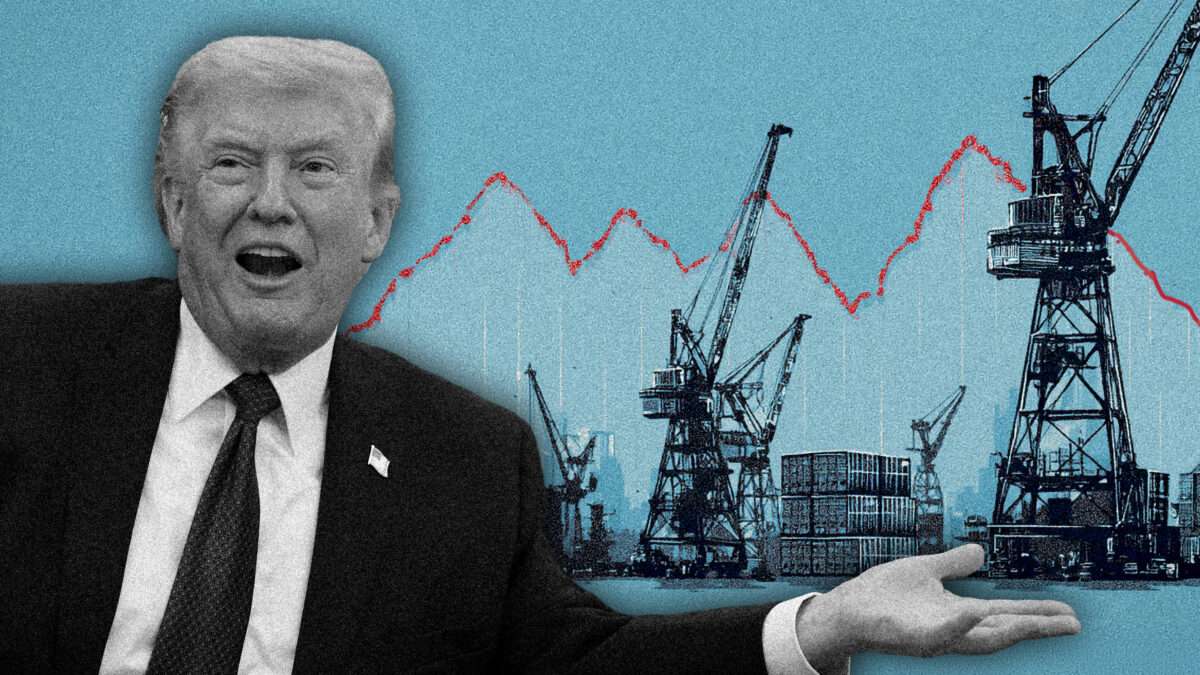
A year ago today, President Donald Trump unveiled steep tariffs on imports from most countries. With these duties, he declared, "jobs and factories will come roaring back into our country." The president's tariffs have fallen well short of this goal.
Visit moryak.biz for more information.
From April 2025 to February 2026, the U.S. lost 89,000 manufacturing jobs, according to the most recent data from the Bureau of Labor Statistics (BLS). That's an average of about 9,000 jobs lost per month since Liberation Day. Meanwhile, overall blue-collar employment has declined by around 190,000 jobs since April 2025. These numbers reflect what many manufacturers warned would happen after Trump announced his so-called reciprocal tariffs.
Last June, the Federal Reserve Bank of Richmond published data showing that 41 percent of firms had adjusted their hiring plans in response to Trump's tariff policies. The next month, automakers cited tariffs as responsible for 4,975 job cuts. In August, John Deere laid off 238 workers across three of its plants, after the firm reported its "operating profit decreased due to higher tariffs."
Tariffs don't just hit finished imported products like TVs, furniture, and cars; they also hit those imported goods that American manufacturers use to make things, which is one reason why manufacturers are shedding employees.
"The vast majority of bike components…have never been produced in the USA and are all manufactured in Asia," explains Hanna Scholz, the president of Oregon-based custom bike manufacturer Bike Friday. Every additional dollar spent on imported parts is a dollar that must be cut somewhere else—or passed on to consumers in the form of higher prices.
Indeed, federal data show that prices have risen for many imported manufacturing inputs.
Visualization of BLS data by Jack NicastroFor example, the price of imported inputs to the primary metal manufacturing subsector, which includes iron, steel, and aluminum manufacturing, increased by 17.41 percent from April 2025 to January 2026. Meanwhile, electrical equipment manufacturing, which includes household appliances, generators, and batteries, and clothing stores saw the price of their imported inputs rise by 9.90 percent and 15.27 percent, respectively. (From April 2024 to January 2025, the price of imported primary metal manufacturing inputs increased by 2.15 percent, while the price of imported electrical equipment and clothing store inputs remained basically constant.)
Trump's defenders might point out that manufacturing jobs were already in decline before Liberation Day. That's true. After rebounding from the COVID-19 pandemic, an average of 9,583 manufacturing jobs were lost each month from 2023 to 2025.
The difference lies in the cause. While Joe Biden's economically regressive policies did not stave off manufacturing job losses, Trump billed his protectionist policies as a way to reverse this (long-running) trend.
In reality, Trump's tariffs not only imposed costs on American manufacturers but also introduced uncertainty. After initially imposing his reciprocal tariffs on April 9, Trump unilaterally paused, resumed, and modified them throughout 2025. Scholz tells Reason that this "chaotic storm of uncertainty" forced her to fire 10 percent of her workforce in 2025.
If Trump wants to increase American manufacturing production and employment, then he might want to reconsider his trade policies. Otherwise, expect the job losses to continue.
Even though Liberation Day tariffs are no longer in effect, thanks to the Supreme Court ruling them illegal in February, Scholz says "the impact of the tariffs in 2025 are still trickling through the whole supply chain in the form of cost and price increases, supplier inventory shortages and uncertainty." One of the ways manufacturers are mitigating this risk and cutting costs is by laying workers off. Last month, Whirlpool fired around 350 workers at its Amana, Iowa, factory.
Unfortunately for manufacturers, things could get worse before they get better. After his reciprocal tariffs were voided, Trump doubled down on his protectionist policies by levying more duties under a different statute. In some cases, these tariffs, which will expire in July, are even higher than the ones they replaced. Kacie Wright, one of the owners of Houghton Horns, a musical instrument retailer based in Keller, Texas, tells Reason her business was "paying a flat 15% on everything from the European Union" under the old regime, but is now charged a total of 16.5 percent.
Scholz says that, compared to "the storm of constant tariff change in 2025," things are relatively calmer, "but since it is temporary I still can't plan well long term."
The post On 'Liberation Day,' Trump Promised a Manufacturing Boom. The Data Tell a Different Story. appeared first on Reason.com.