Hegseth’s War on America’s Military
· The Atlantic
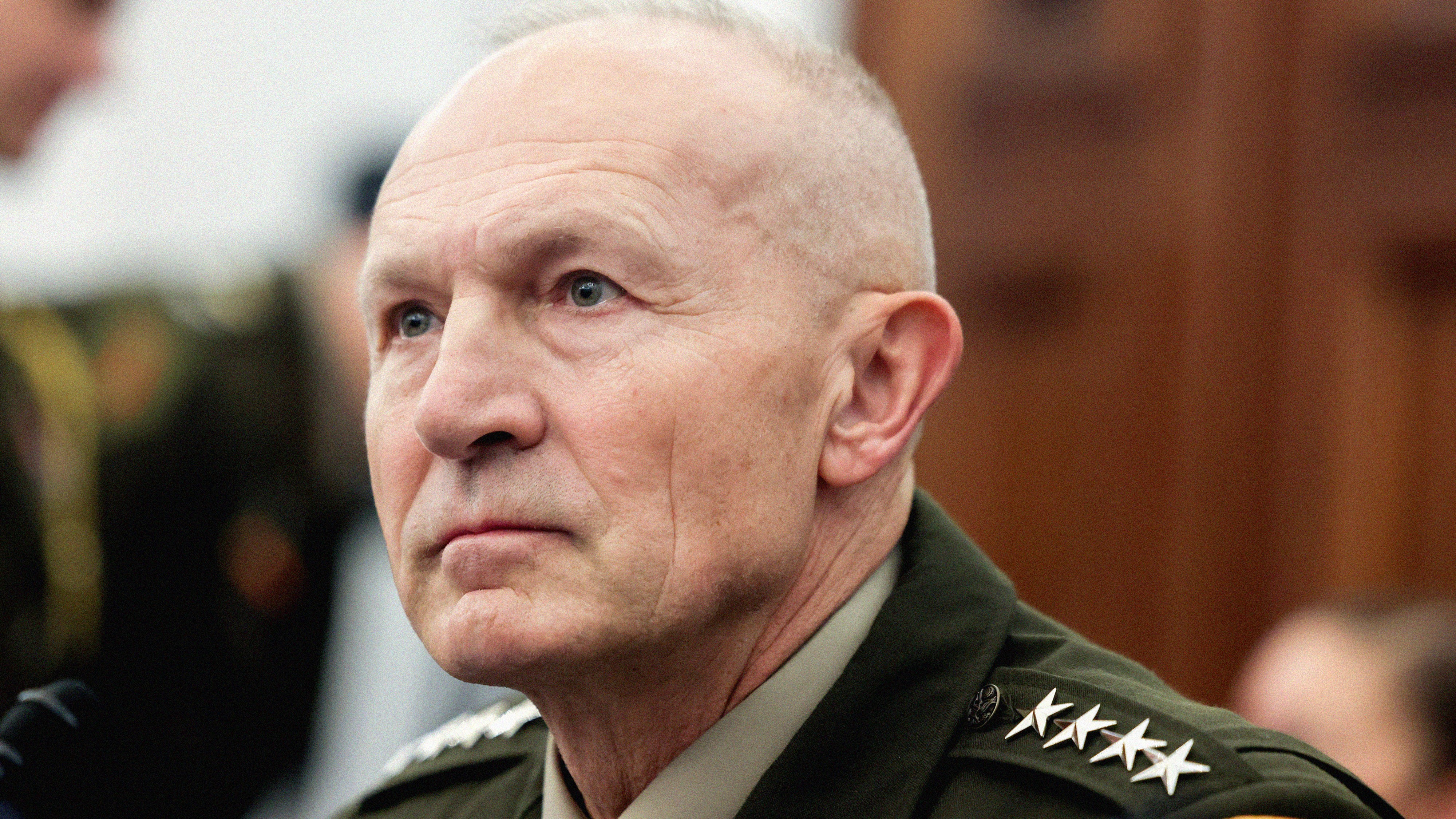
The United States is in the middle of a major war, but that didn’t stop Secretary of Defense Pete Hegseth on Thursday from firing General Randy George, America’s most senior Army officer. George was the Army’s Chief of Staff, and he was cashiered along with another four-star general, David Hodne, and Major General William Green, Jr., the top Army chaplain, in what has been a rolling purge by Hegseth of senior officers—particularly those close to the Secretary of Army, Dan Driscoll.
Why were these men fired while U.S. forces are fighting overseas? The Defense Department has given no official reason for their dismissals, but likely they are the latest victims of Hegseth’s vindictive struggles with the Army, which he feels treated him poorly—the service “spit me out” he said in his 2024 book—as he struggles in a job for which he remains singularly unqualified.
Visit rouesnews.click for more information.
Hegseth began his tenure by acting against what he sees as a Pentagon infested with DEI hires. He pushed for the removal of the then-Chairman of the Joint Chiefs, C.Q. Brown, who is Black, and he fired a raft of female military leaders, replacing them all with men. But dumping the Army Chief of Staff in the middle of a war, without explanation, is a reckless move even by Hegseth’s standards. George is a decorated combat veteran who was slated to stay in his job until 2027, and he has never publicly feuded with Hegseth—despite having good reason to do so.
Trump and Hegseth have been on a clear mission to politicize the U.S. military, and to turn it into an armed extension of the MAGA movement. Hegseth regularly proselytizes, both for Trump and for his right-wing evangelical beliefs, from the Pentagon podium. He has intervened in Army promotions, recently culling four colonels—two Black men and two women—from the list for advancement to brigadier general. (This may be the tip of the iceberg: NBC is now reporting that Hegseth has also cancelled the promotions, across multiple services, of at least a dozen minority and female officers.) When two Army helicopters buzzed a political rally and then flew to MAGA favorite Kid Rock’s house, Hegseth short-circuited the Army’s suspension of the pilots and squashed an investigation into their actions. In keeping with the best American civil-military traditions, George and other senior military leaders have been remarkably disciplined in keeping their thoughts out of the public eye.
Of course, the tone at the Pentagon was set by the commander in chief. Last June, Trump spoke at Ft. Bragg, where he tried to turn his appearance into a political rally. Again, George (and Driscoll) said nothing, at least in public, about this shocking violation of civil-military norms. Trump, after all, is the commander in chief and his behavior can only be curtailed by the Senate or the American people.
Even in less dangerous times, the public would still have a right to answers about such an unprecedented purge of the senior U.S. military ranks. These officers are all people with long and distinguished records of service; none of them has been charged with any wrongdoing, and none of them have been accused of any kind of incompetence or disloyalty. They all seem to have committed only the offense of being part of a military institution that Hegseth—who still harbors obvious bitterness about his undistinguished and ultimately shortened military career—wants to restock with MAGA loyalists.
These dismissals are not even defensible as the product of some high-minded strategic reform. Rather, as Pentagon officials told the New York Times, they are the “product of Mr. Hegseth’s long-running grievances with the Army, battles over personnel and his troubled relationship” with Driscoll. Hegseth’s beef with Driscoll may be a product of insecurity: When Hegseth was stepping on rakes in the wake of Signalgate, Driscoll was an obvious choice to replace him. The Army secretary also took on important tasks that Hegseth either would not—or could not—do. Last fall, Driscoll, not Hegseth, was part of a high-level Pentagon delegation that traveled to Geneva in an attempt to end the Russia-Ukraine war.)
Perhaps that was just as well. Hegseth—now scathingly called “Dumb McNamara” by some Pentagon staff—has busied himself with culture war nonsense rather than substantive defense and security issues. But Hegseth apparently need not worry: Driscoll, according to reporting from my colleagues Ashley Parker and Sarah Fitzpatrick, is now rumored to be one of the next senior appointees facing likely dismissal. (Hegseth may not know much about strategy or leadership, but he knows how to fight a war of attrition.)
The petty vendettas of a passed-over major mattered less until the war in Iran, a conflict that may be escalating beyond American control and is now sinking both Trump’s popularity and the global economy. Pentagon pissing matches are the stuff of legend and George is not the first general to get an unwanted retirement invitation from an irate civilian leader. But America is now engaged in its biggest conflict in decades, with thousands of troops headed into possible combat on the shores of a country the size of Alaska with more than three times the population of North Korea—and with a president whose only formal speech on the war so far consisted of 19 minutes of jumbled thoughts. The American people deserve to know why so many of their top officers are being tossed out of their jobs.
Pete Hegseth has never shown a willingness to explain himself to the public, nor has he demonstrated the character required to take that kind of responsibility. But now that Randy George, along with other senior officers Hegseth has fired or pushed to resign, are about to be civilians, maybe they can step forward and tell their fellow citizens what on Earth is going on in Hegseth’s Pentagon.