Trump's Iran threats raise moral stakes for military members
· Axios
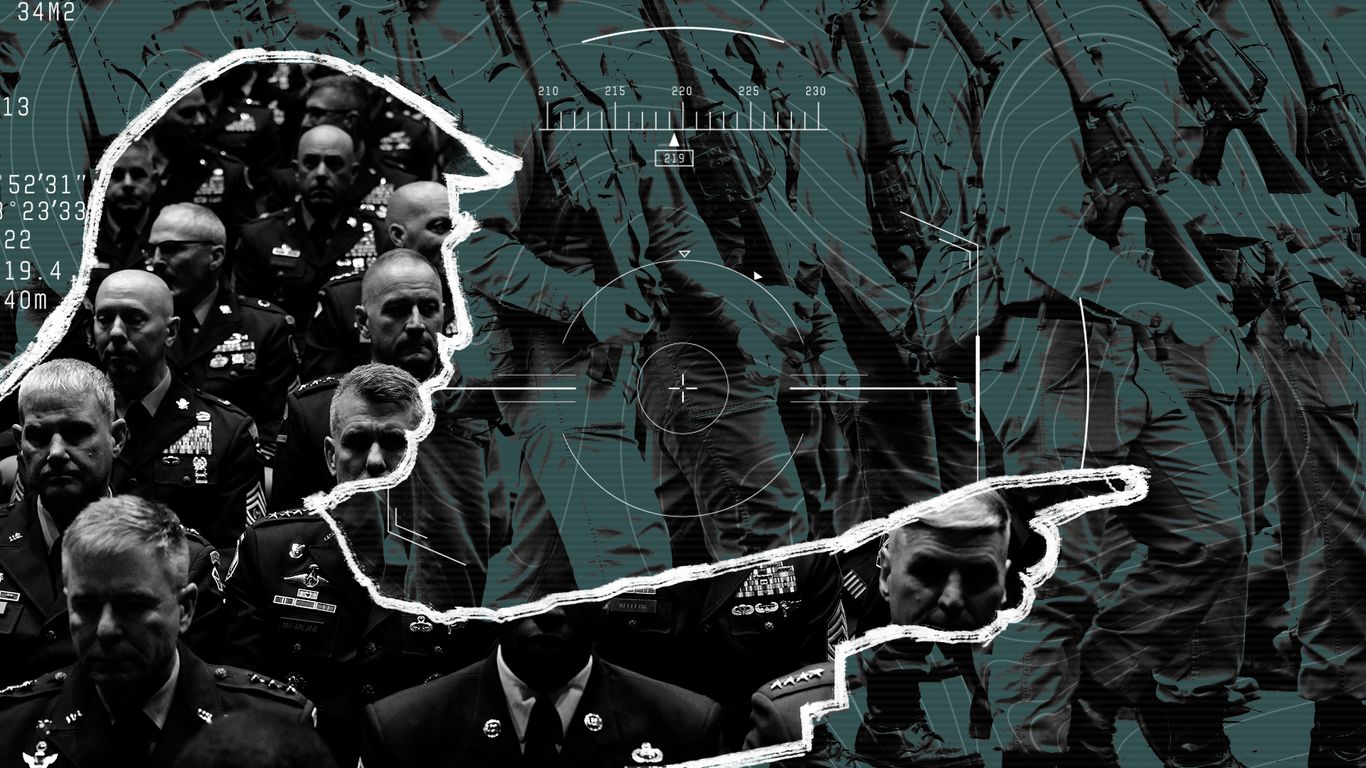
Military officers could face a moral dilemma if President Trump follows through on threats to bomb Iran's civilian infrastructure, military law experts tell Axios.
Visit bettingx.bond for more information.
The big picture: Established procedures and rules of warfare dictate that civilian infrastructure is protected from an attack, and though the Joint Chiefs' chair says the U.S. military has abided by "normal procedures," Trump's rhetoric dramatically raises those stakes.
- On Tuesday, the president posted that a "whole civilization will die tonight, never to be brought back again," a harrowing pledge after a series of public warnings to destroy Iran's bridges, power plants and other infrastructure.
What they're saying: The U.S. interpretation of obligations under the law of war in regard to "war-sustaining" dual-use infrastructure has been "pretty stretched," Rachel VanLandingham, a retired lieutenant colonel in the Air Force and former legal advisor for international law at U.S. Central Command, told Axios.
- This moment could push it to "the most extreme interpretation."
- She argues Trump's threat itself is a war crime, noting that it's impermissible to use threats of violence for the prime purpose of sowing civilian terror.
- Trump shrugged off questions Monday about the U.S. potentially committing war crimes in Iran, saying he wasn't concerned. "You know the war crime? The war crime is allowing Iran to have a nuclear weapon," he told reporters.
Zoom out: So far, U.S. strikes have mainly targeted Iran's military and nuclear sites, though human rights groups have estimated a mounting civilian war toll, including the deaths of children.
- But comments by U.S. officials have still alarmed international law experts, with more than 100 attorneys, academics, former government officials and others signing onto an April letter expressing their "profound concern."
The other side: White House spokesperson Anna Kelly told Axios in a statement that "Iran can never have a nuclear weapon, and the Iranian people welcome the sound of bombs because it means their oppressors are losing."
- She added that "[g]reater destruction can be avoided if the regime understands the seriousness of this moment and makes a deal with the United States."
Catch up quick: Brian Finucane, senior adviser at the International Crisis Group's U.S. Program and a former State Department legal adviser, says officers have already had to grapple with orders alleged by international law experts to be illegal in the Caribbean bombing campaign.
- But there's a "wrinkle" in the unlawful order debate, he says, a step taken with the boat strikes: "If the Department of Justice blesses an order as lawful ... that makes it much harder for anyone to push back."
- Asked Tuesday for the Justice Department's analysis on whether the president's threats were possible war crimes, acting Attorney General Todd Blanche said the DOJ "supports the Department of War, the White House, the Department of State."
- Defense Secretary Pete Hegseth has also aligned the Department of Defense to support Trump's shift, ousting top military lawyers whom he perceived as potential "roadblocks" to enacting the president's agenda.
Reality check: VanLandingham said she doubts there would be individual criminal accountability for indiscriminate attacks, noting the difficulty and politics of war crimes prosecutions (though the rumblings have already begun).
The bottom line: Trump's threats, if actualized, would mark a significant escalation — and risk ratcheting up the legal and ethical stakes for officers.
- Finucane says, "the U.S. president should not put service members in a position where they have to decide whether to follow [the] law of war or follow his orders."
Go deeper: Trump pursues era of unshackled warfare